
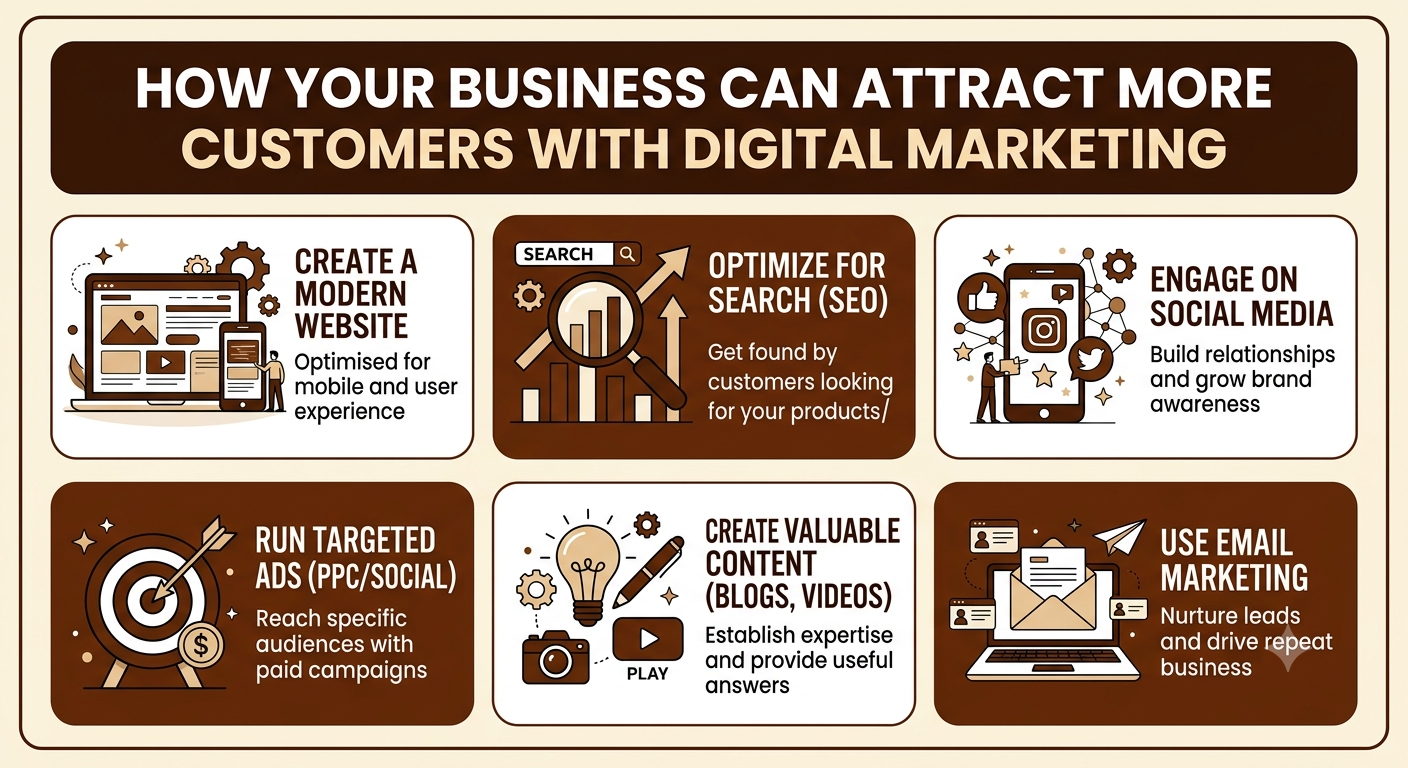
Tamilnaadu is one of India’s fastest-growing business and technology hubs. From startups and IT companies to restaurants, real estate businesses, fitness centers, salons, and local service providers, businesses in Tamilnaadu are increasingly using digital marketing to reach potential customers. But simply having a website or social media account is not enough. Businesses need a clear digital marketing strategy to attract the right audience and turn visitors into customers. 1. Build a Professional Website Your website is often the first place a potential customer checks before contacting your business. A good business website should be: For example, a Tamilnaadu-based restaurant can include its menu, location, photos, customer reviews, and contact details so customers can quickly make a decision. 2. Use Local SEO If you operate in Tamilnaadu, local SEO can help people discover your business when they search for services nearby. For example, customers may search for: Optimizing your website and Google Business Profile for relevant local searches can help improve your online visibility. 3. Create Useful Content Content marketing is another effective way to attract potential customers. You can create blog posts, videos, social media posts, guides, and tutorials that answer questions your customers commonly ask. For example, a real estate business in Tamilnaadu could publish articles about choosing a property, different Tamilnaadu neighborhoods, or tips for first-time home buyers. Useful content can build trust before a customer even contacts you. 4. Use Social Media Marketing Platforms such as Instagram, Facebook, LinkedIn, YouTube, and Pinterest can help businesses connect with their target audience. Instead of posting only advertisements, share: Consistency is more important than simply posting frequently. 5. Try Google Ads and Social Media Ads Paid advertising can help businesses reach potential customers faster. For example, a Tamilnaadu-based service provider can target people searching for a specific service in selected areas of the city. Start with a reasonable budget, test different advertisements, and measure leads and conversions before increasing your spending. 6. Build Customer Reviews Reviews are particularly important for local businesses. Genuine positive reviews can help potential customers feel more confident about choosing your business. Ask satisfied customers to leave honest feedback and respond professionally to reviews. 7. Track Your Marketing Results Don’t judge your marketing only by likes and followers. Monitor: Tools such as Google Search Console and Google Analytics can help you understand what is bringing visitors to your website. Conclusion For businesses in Tamilnaadu, digital marketing provides many opportunities to reach local and national customers. A combination of local SEO, a professional website, content marketing, social media, online advertising, and analytics can create a strong foundation for sustainable growth. The most important thing is to understand your customers and provide them with useful information at the right time. Whether you are a startup, local shop, freelancer, service provider, or established company in Tamilnaadu, a well-planned digital marketing strategy can help you increase online visibility, generate more enquiries, and attract new customers. Digital Marketing freelancer in Tamilnadu
How Your Business Can Attract More Customers with Digital Marketing in Kerala
Kerala is one of India’s fastest-growing business and technology hubs. From startups and IT companies to restaurants, real estate businesses, fitness centers, salons, and local service providers, businesses in Kerala are increasingly using digital marketing to reach potential customers. But simply having a website or social media account is not enough. Businesses need a clear digital marketing strategy to attract the right audience and turn visitors into customers. 1. Build a Professional Website Your website is often the first place a potential customer checks before contacting your business. A good business website should be: For example, a Kerala-based restaurant can include its menu, location, photos, customer reviews, and contact details so customers can quickly make a decision. 2. Use Local SEO If you operate in Kerala, local SEO can help people discover your business when they search for services nearby. For example, customers may search for: Optimizing your website and Google Business Profile for relevant local searches can help improve your online visibility. 3. Create Useful Content Content marketing is another effective way to attract potential customers. You can create blog posts, videos, social media posts, guides, and tutorials that answer questions your customers commonly ask. For example, a real estate business in Kerala could publish articles about choosing a property, different Kerala neighborhoods, or tips for first-time home buyers. Useful content can build trust before a customer even contacts you. 4. Use Social Media Marketing Platforms such as Instagram, Facebook, LinkedIn, YouTube, and Pinterest can help businesses connect with their target audience. Instead of posting only advertisements, share: Consistency is more important than simply posting frequently. 5. Try Google Ads and Social Media Ads Paid advertising can help businesses reach potential customers faster. For example, a Kerala-based service provider can target people searching for a specific service in selected areas of the city. Start with a reasonable budget, test different advertisements, and measure leads and conversions before increasing your spending. 6. Build Customer Reviews Reviews are particularly important for local businesses. Genuine positive reviews can help potential customers feel more confident about choosing your business. Ask satisfied customers to leave honest feedback and respond professionally to reviews. 7. Track Your Marketing Results Don’t judge your marketing only by likes and followers. Monitor: Tools such as Google Search Console and Google Analytics can help you understand what is bringing visitors to your website. Conclusion For businesses in Kerala, digital marketing provides many opportunities to reach local and national customers. A combination of local SEO, a professional website, content marketing, social media, online advertising, and analytics can create a strong foundation for sustainable growth. The most important thing is to understand your customers and provide them with useful information at the right time. Whether you are a startup, local shop, freelancer, service provider, or established company in Kerala, a well-planned digital marketing strategy can help you increase online visibility, generate more enquiries, and attract new customers. Digital Marketing freelancer in Kerala
How Your Business Can Attract More Customers with Digital Marketing in Mumbai
Mumbai is one of India’s fastest-growing business and technology hubs. From startups and IT companies to restaurants, real estate businesses, fitness centers, salons, and local service providers, businesses in Mumbai are increasingly using digital marketing to reach potential customers. But simply having a website or social media account is not enough. Businesses need a clear digital marketing strategy to attract the right audience and turn visitors into customers. 1. Build a Professional Website Your website is often the first place a potential customer checks before contacting your business. A good business website should be: For example, a Mumbai-based restaurant can include its menu, location, photos, customer reviews, and contact details so customers can quickly make a decision. 2. Use Local SEO If you operate in Mumbai, local SEO can help people discover your business when they search for services nearby. For example, customers may search for: Optimizing your website and Google Business Profile for relevant local searches can help improve your online visibility. 3. Create Useful Content Content marketing is another effective way to attract potential customers. You can create blog posts, videos, social media posts, guides, and tutorials that answer questions your customers commonly ask. For example, a real estate business in Mumbai could publish articles about choosing a property, different Mumbai neighborhoods, or tips for first-time home buyers. Useful content can build trust before a customer even contacts you. 4. Use Social Media Marketing Platforms such as Instagram, Facebook, LinkedIn, YouTube, and Pinterest can help businesses connect with their target audience. Instead of posting only advertisements, share: Consistency is more important than simply posting frequently. 5. Try Google Ads and Social Media Ads Paid advertising can help businesses reach potential customers faster. For example, a Mumbai-based service provider can target people searching for a specific service in selected areas of the city. Start with a reasonable budget, test different advertisements, and measure leads and conversions before increasing your spending. 6. Build Customer Reviews Reviews are particularly important for local businesses. Genuine positive reviews can help potential customers feel more confident about choosing your business. Ask satisfied customers to leave honest feedback and respond professionally to reviews. 7. Track Your Marketing Results Don’t judge your marketing only by likes and followers. Monitor: Tools such as Google Search Console and Google Analytics can help you understand what is bringing visitors to your website. Conclusion For businesses in Mumbai, digital marketing provides many opportunities to reach local and national customers. A combination of local SEO, a professional website, content marketing, social media, online advertising, and analytics can create a strong foundation for sustainable growth. The most important thing is to understand your customers and provide them with useful information at the right time. Whether you are a startup, local shop, freelancer, service provider, or established company in Mumbai, a well-planned digital marketing strategy can help you increase online visibility, generate more enquiries, and attract new customers. Digital Marketing freelancer in Mumbai
How Your Business Can Attract More Customers with Digital Marketing in Shivamoga
Shivamoga is one of India’s fastest-growing business and technology hubs. From startups and IT companies to restaurants, real estate businesses, fitness centers, salons, and local service providers, businesses in Shivamoga are increasingly using digital marketing to reach potential customers. But simply having a website or social media account is not enough. Businesses need a clear digital marketing strategy to attract the right audience and turn visitors into customers. 1. Build a Professional Website Your website is often the first place a potential customer checks before contacting your business. A good business website should be: For example, a Shivamoga-based restaurant can include its menu, location, photos, customer reviews, and contact details so customers can quickly make a decision. 2. Use Local SEO If you operate in Shivamoga, local SEO can help people discover your business when they search for services nearby. For example, customers may search for: Optimizing your website and Google Business Profile for relevant local searches can help improve your online visibility. 3. Create Useful Content Content marketing is another effective way to attract potential customers. You can create blog posts, videos, social media posts, guides, and tutorials that answer questions your customers commonly ask. For example, a real estate business in Shivamoga could publish articles about choosing a property, different Shivamoga neighborhoods, or tips for first-time home buyers. Useful content can build trust before a customer even contacts you. 4. Use Social Media Marketing Platforms such as Instagram, Facebook, LinkedIn, YouTube, and Pinterest can help businesses connect with their target audience. Instead of posting only advertisements, share: Consistency is more important than simply posting frequently. 5. Try Google Ads and Social Media Ads Paid advertising can help businesses reach potential customers faster. For example, a Shivamoga-based service provider can target people searching for a specific service in selected areas of the city. Start with a reasonable budget, test different advertisements, and measure leads and conversions before increasing your spending. 6. Build Customer Reviews Reviews are particularly important for local businesses. Genuine positive reviews can help potential customers feel more confident about choosing your business. Ask satisfied customers to leave honest feedback and respond professionally to reviews. 7. Track Your Marketing Results Don’t judge your marketing only by likes and followers. Monitor: Tools such as Google Search Console and Google Analytics can help you understand what is bringing visitors to your website. Conclusion For businesses in Shivamoga, digital marketing provides many opportunities to reach local and national customers. A combination of local SEO, a professional website, content marketing, social media, online advertising, and analytics can create a strong foundation for sustainable growth. The most important thing is to understand your customers and provide them with useful information at the right time. Whether you are a startup, local shop, freelancer, service provider, or established company in Shivamoga, a well-planned digital marketing strategy can help you increase online visibility, generate more enquiries, and attract new customers. Digital Marketing freelancer in Shivamoga
How Your Business Can Attract More Customers with Digital Marketing in Mysore
Mysore is one of India’s fastest-growing business and technology hubs. From startups and IT companies to restaurants, real estate businesses, fitness centers, salons, and local service providers, businesses in Mysore are increasingly using digital marketing to reach potential customers. But simply having a website or social media account is not enough. Businesses need a clear digital marketing strategy to attract the right audience and turn visitors into customers. 1. Build a Professional Website Your website is often the first place a potential customer checks before contacting your business. A good business website should be: For example, a Mysore-based restaurant can include its menu, location, photos, customer reviews, and contact details so customers can quickly make a decision. 2. Use Local SEO If you operate in Mysore, local SEO can help people discover your business when they search for services nearby. For example, customers may search for: Optimizing your website and Google Business Profile for relevant local searches can help improve your online visibility. 3. Create Useful Content Content marketing is another effective way to attract potential customers. You can create blog posts, videos, social media posts, guides, and tutorials that answer questions your customers commonly ask. For example, a real estate business in Mysore could publish articles about choosing a property, different Mysore neighborhoods, or tips for first-time home buyers. Useful content can build trust before a customer even contacts you. 4. Use Social Media Marketing Platforms such as Instagram, Facebook, LinkedIn, YouTube, and Pinterest can help businesses connect with their target audience. Instead of posting only advertisements, share: Consistency is more important than simply posting frequently. 5. Try Google Ads and Social Media Ads Paid advertising can help businesses reach potential customers faster. For example, a Mysore-based service provider can target people searching for a specific service in selected areas of the city. Start with a reasonable budget, test different advertisements, and measure leads and conversions before increasing your spending. 6. Build Customer Reviews Reviews are particularly important for local businesses. Genuine positive reviews can help potential customers feel more confident about choosing your business. Ask satisfied customers to leave honest feedback and respond professionally to reviews. 7. Track Your Marketing Results Don’t judge your marketing only by likes and followers. Monitor: Tools such as Google Search Console and Google Analytics can help you understand what is bringing visitors to your website. Conclusion For businesses in Mysore, digital marketing provides many opportunities to reach local and national customers. A combination of local SEO, a professional website, content marketing, social media, online advertising, and analytics can create a strong foundation for sustainable growth. The most important thing is to understand your customers and provide them with useful information at the right time. Whether you are a startup, local shop, freelancer, service provider, or established company in Mysore, a well-planned digital marketing strategy can help you increase online visibility, generate more enquiries, and attract new customers. Digital Marketing freelancer in Mysore
How Your Business Can Attract More Customers with Digital Marketing in Bangalore
Bangalore is one of India’s fastest-growing business and technology hubs. From startups and IT companies to restaurants, real estate businesses, fitness centers, salons, and local service providers, businesses in Bangalore are increasingly using digital marketing to reach potential customers. But simply having a website or social media account is not enough. Businesses need a clear digital marketing strategy to attract the right audience and turn visitors into customers. 1. Build a Professional Website Your website is often the first place a potential customer checks before contacting your business. A good business website should be: For example, a Bangalore-based restaurant can include its menu, location, photos, customer reviews, and contact details so customers can quickly make a decision. 2. Use Local SEO If you operate in Bangalore, local SEO can help people discover your business when they search for services nearby. For example, customers may search for: Optimizing your website and Google Business Profile for relevant local searches can help improve your online visibility. 3. Create Useful Content Content marketing is another effective way to attract potential customers. You can create blog posts, videos, social media posts, guides, and tutorials that answer questions your customers commonly ask. For example, a real estate business in Bangalore could publish articles about choosing a property, different Bangalore neighborhoods, or tips for first-time home buyers. Useful content can build trust before a customer even contacts you. 4. Use Social Media Marketing Platforms such as Instagram, Facebook, LinkedIn, YouTube, and Pinterest can help businesses connect with their target audience. Instead of posting only advertisements, share: Consistency is more important than simply posting frequently. 5. Try Google Ads and Social Media Ads Paid advertising can help businesses reach potential customers faster. For example, a Bangalore-based service provider can target people searching for a specific service in selected areas of the city. Start with a reasonable budget, test different advertisements, and measure leads and conversions before increasing your spending. 6. Build Customer Reviews Reviews are particularly important for local businesses. Genuine positive reviews can help potential customers feel more confident about choosing your business. Ask satisfied customers to leave honest feedback and respond professionally to reviews. 7. Track Your Marketing Results Don’t judge your marketing only by likes and followers. Monitor: Tools such as Google Search Console and Google Analytics can help you understand what is bringing visitors to your website. Conclusion For businesses in Bangalore, digital marketing provides many opportunities to reach local and national customers. A combination of local SEO, a professional website, content marketing, social media, online advertising, and analytics can create a strong foundation for sustainable growth. The most important thing is to understand your customers and provide them with useful information at the right time. Whether you are a startup, local shop, freelancer, service provider, or established company in Bangalore, a well-planned digital marketing strategy can help you increase online visibility, generate more enquiries, and attract new customers. Digital Marketing freelancer in Bangalore
How Local SEO Helps Small Businesses Get More Customers
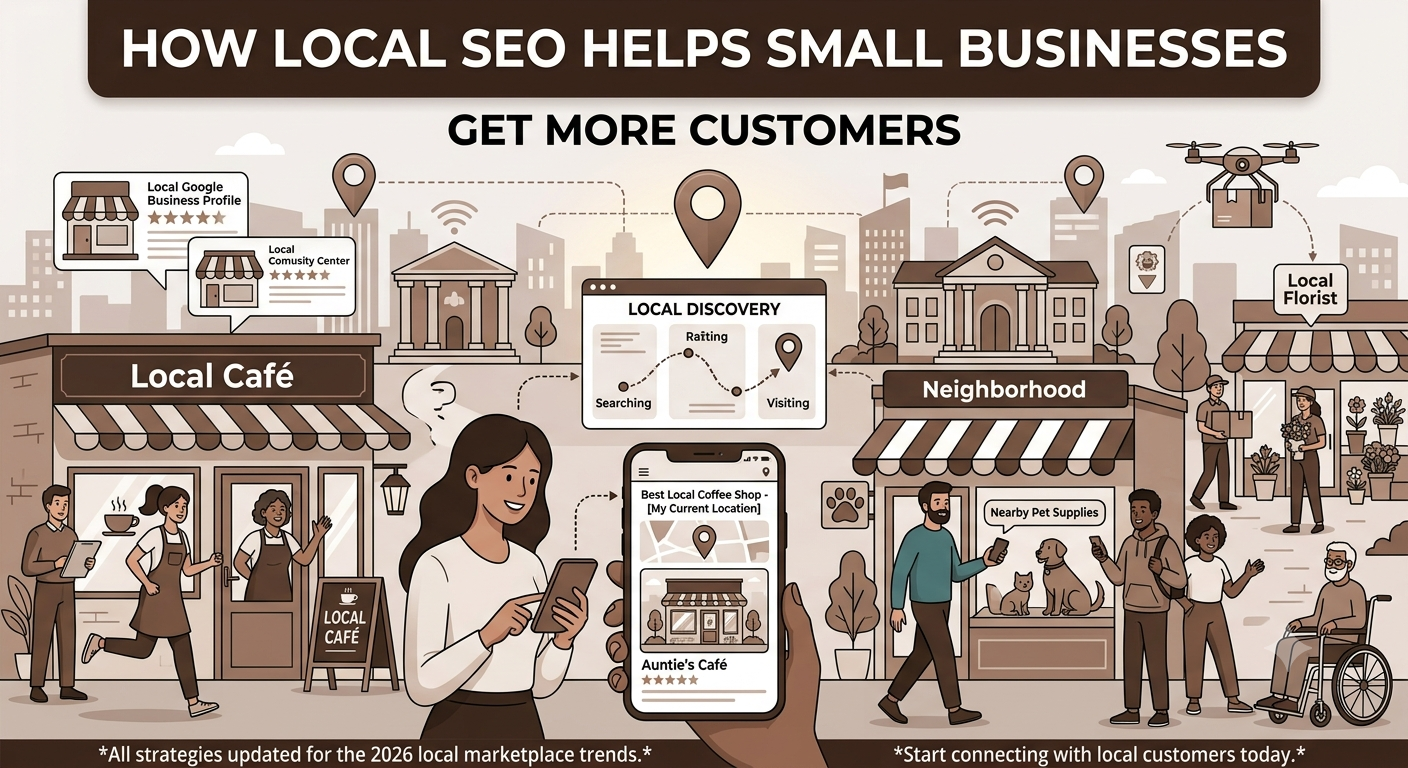
In 2026, having an online presence is important for every small business, especially those that serve customers in a specific location. When people search on Google for nearby products or services, they often look for businesses that are relevant to their needs and location. This is where Local SEO (Local Search Engine Optimization) plays an important role. Local SEO helps small businesses improve their visibility in location-based search results, making it easier for potential customers to discover their services. Whether you own a restaurant, salon, retail shop, clinic, or service-based business, local SEO can help you reach people who are searching for businesses in your area. What Is Local SEO? Local SEO is the process of optimizing your online presence to improve visibility in search results for location-specific searches. It helps search engines understand where your business operates, what services you offer, and which local customers may find your business relevant. For example, if someone searches for “best bakery in Bangalore” or “salon near me,” Google may show relevant local businesses along with their locations, reviews, contact details, and directions. Local SEO helps your business become more discoverable for these types of searches. Unlike general SEO, which may target a broader audience, Local SEO focuses on attracting potential customers in a particular city, neighbourhood, or service area. Why Is Local SEO Important for Small Businesses? Local SEO is especially useful for small businesses that depend on customers from nearby locations. People often use search engines to find businesses when they need a product or service, and local search visibility can help businesses connect with those potential customers. For example, a person looking for a nearby dental clinic may search for “dentist near me.” If your clinic has accurate business information, a well-maintained online presence, and relevant local content, it may have a better opportunity to appear in suitable local results. Local SEO can help small businesses improve online visibility, build trust through genuine customer reviews, provide convenient access to contact details, and attract relevant local enquiries. While rankings and customer visits cannot be guaranteed, a strong local presence can make it easier for people to find and learn about your business. How Google Business Profile Helps Local SEO Google Business Profile is an important tool for local businesses. It allows you to manage how your business information appears on Google Search and Google Maps. A complete and accurate profile can help potential customers find important details such as your business name, address or service area, phone number, website, opening hours, photos, and services. Keeping this information updated can improve the experience for people searching for your business. For example, a restaurant in Bangalore can use its Google Business Profile to display its menu, photos, business hours, contact details, and customer reviews. This helps potential customers learn about the restaurant before deciding whether to visit. Make sure your profile represents your real business accurately and follows Google’s guidelines. Avoid adding misleading information or unnecessary keywords to your business name. Optimize Your Website for Local Keywords Local keyword research helps you understand how people search for businesses in your area. Including relevant location-based phrases in your website content can help search engines understand which locations your business serves. For example, a digital marketing freelancer serving Bangalore might use phrases such as “SEO services in Bangalore,” “website design in Bangalore,” or “social media marketing for small businesses in Bangalore” where they naturally fit. You can include relevant local keywords in your page titles, headings, service descriptions, and website content. However, avoid keyword stuffing or creating multiple pages with nearly identical content for different locations. Focus on useful information that genuinely helps local customers. Keep Your Business Information Consistent Consistency in business information is an important part of local SEO. Your business name, address, and phone number, often referred to as NAP, should be accurate wherever they appear online. When your details are inconsistent across your website, business directories, and other platforms, customers may become confused about how to contact or locate your business. Make sure your contact details and business information are updated on your website, Google Business Profile, and relevant business listings. If your business moves or changes its phone number or operating hours, update your online information accordingly. Collect Genuine Customer Reviews Customer reviews can help people understand other customers’ experiences with your business. Many potential customers read reviews before deciding which local business to contact or visit. Encourage satisfied customers to leave honest feedback about their experience. You can politely ask for reviews after completing a service or making a sale, while following the review platform’s policies. Respond to reviews professionally, whether they are positive or negative. Thank customers for their feedback and address concerns respectfully. Genuine reviews can help build trust and give potential customers more information about your business. Create Location-Specific Content Publishing useful, location-specific content can help your business connect with customers in the areas you serve. Your website can include service pages, blog articles, and guides that answer questions relevant to your local audience. For example, a home cleaning business in Bangalore could publish an article about preparing a home for professional cleaning or explain the cleaning services available in the areas it genuinely serves. The content should provide useful local information instead of simply repeating the city name throughout the page. Creating original, relevant content helps visitors understand your services and may support your local search visibility. Make Your Website Mobile-Friendly Many local searches take place on mobile devices, especially when people are looking for nearby businesses while travelling or moving around their area. A mobile-friendly website makes it easier for potential customers to access your information on smartphones. Your website should have readable text, clear navigation, clickable phone numbers, easy-to-use contact buttons, and properly displayed images. It should also load efficiently and work well on different screen sizes. A convenient mobile experience can help visitors find your location, understand your services, and contact your business without difficulty. Build Local Backlinks Local backlinks are
10 Simple SEO Tips for Small Businesses
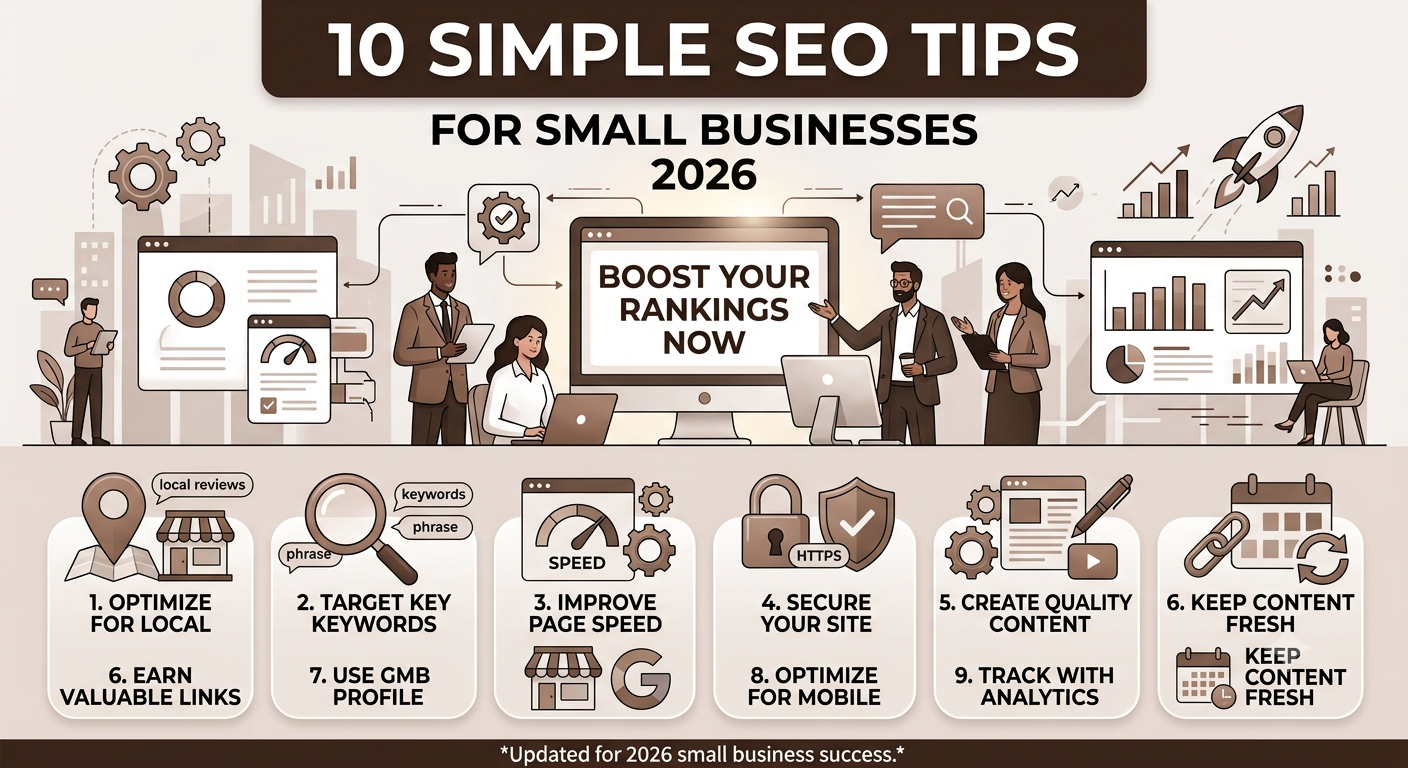
Search Engine Optimization (SEO) is an important part of digital marketing for small businesses that want to improve their online visibility and attract potential customers. In 2026, many customers use search engines like Google to find products, services, and local businesses. A well-optimized website can help your business appear in relevant search results, increase organic traffic, and build trust with your target audience. SEO may seem complicated at first, especially for small businesses with limited budgets and resources. However, following some simple SEO practices consistently can help improve your website’s performance over time. Whether you own a startup, a local shop, or a service-based business, these ten SEO tips can help you build a stronger online presence. 1. Choose the Right Keywords Keyword research is one of the first steps in SEO. Keywords are the words and phrases people type into search engines when looking for information, products, or services. Understanding what your potential customers are searching for can help you create relevant website content that matches their needs. For example, if you own a bakery in Bangalore, you may target keywords such as “best bakery in Bangalore,” “birthday cake shop near me,” or “custom cakes in Bangalore.” Choose keywords that are closely related to your business, consider what the searcher wants, and use these phrases naturally in your website content, headings, and page titles. 2. Optimize Your Page Titles and Meta Descriptions Page titles and meta descriptions help users understand what your website pages are about when they appear in search results. A clear and relevant title can communicate the main topic of your page, while a helpful meta description can encourage people to visit your website. For example, a digital marketing freelancer could use a title such as “SEO Services in Bangalore | Puneeth” and a description explaining the SEO services offered to small businesses. Keep your titles descriptive and unique, and write meta descriptions that accurately summarize the page rather than simply repeating keywords. 3. Create High-Quality and Helpful Content Creating useful and original content is an important part of a successful SEO strategy. Your website should answer the questions your target audience is asking and provide information that helps them make decisions. Blog articles, service pages, guides, and frequently asked questions can all help visitors understand your business. For example, a small business offering digital marketing services can publish articles about SEO, social media marketing, website design, and online advertising. Focus on content that is accurate, easy to read, and genuinely helpful. Avoid copying content from other websites or creating articles solely to insert keywords. 4. Optimize Your Website for Mobile Devices Many people use smartphones to search for businesses, browse products, and access online services. A mobile-friendly website makes it easier for visitors to read your content, navigate your pages, and contact your business without unnecessary zooming or scrolling. Make sure your website has responsive layouts, readable text, easy-to-use buttons, and clear navigation on different screen sizes. A good mobile experience helps visitors interact with your website and is also part of Google’s page experience considerations. 5. Improve Your Website Loading Speed Website speed is an important part of user experience. If your website takes too long to load, visitors may leave before viewing your content or services. Slow performance can be caused by large image files, unnecessary plugins, unoptimized scripts, or hosting limitations. You can improve your website’s performance by compressing images, using modern image formats, reducing unnecessary scripts, choosing reliable hosting, and monitoring loading performance. Tools such as Google PageSpeed Insights can help you identify issues and find opportunities to improve your website. 6. Use Internal Linking Internal linking means connecting one page of your website to another relevant page. It helps visitors discover related information and allows search engines to better understand the structure of your website. For example, if you have a blog about basic SEO practices, you can link to your main SEO guide, relevant service pages, and other related articles. You can explore our Complete Guide to SEO for Small Businesses in 2026 to understand how different SEO techniques work together. Internal links should be useful and natural. Choose descriptive anchor text that tells readers what they can expect when they click the link. 7. Optimize Your Google Business Profile For businesses serving customers in a particular location, Google Business Profile can help improve visibility on Google Search and Maps. It allows potential customers to find important information about your business, such as your address or service area, phone number, business hours, website, and services. Keep your profile accurate and updated with relevant photos, business details, and genuine customer reviews. Respond professionally to customer feedback and ensure that the information on your profile matches your actual business details. This can make it easier for nearby customers to discover and contact you. 8. Build Relevant and Quality Backlinks Backlinks are links from other websites that point to your website. Relevant and trustworthy backlinks can help search engines discover your content and may contribute to your website’s authority and reputation. Small businesses can work towards earning backlinks by publishing useful resources, collaborating with relevant businesses, contributing expert articles, and getting listed in appropriate industry or local directories. Focus on the relevance and quality of links rather than trying to acquire a large number of backlinks through spammy methods. 9. Focus on Local SEO Local SEO helps businesses improve their visibility for searches related to a particular location. It is especially useful for businesses such as restaurants, salons, clinics, service providers, and retail stores that serve customers in specific areas. For example, a salon in Bangalore may want to appear for searches such as “hair salon in Bangalore” or “salon near me.” Maintaining an accurate Google Business Profile, creating helpful location-specific website content, and collecting genuine customer reviews can support local SEO efforts. To learn more about this strategy, read our related guide: How Local SEO Helps Small Businesses Get More Customers. 10. Monitor Your SEO Performance SEO requires ongoing improvement,
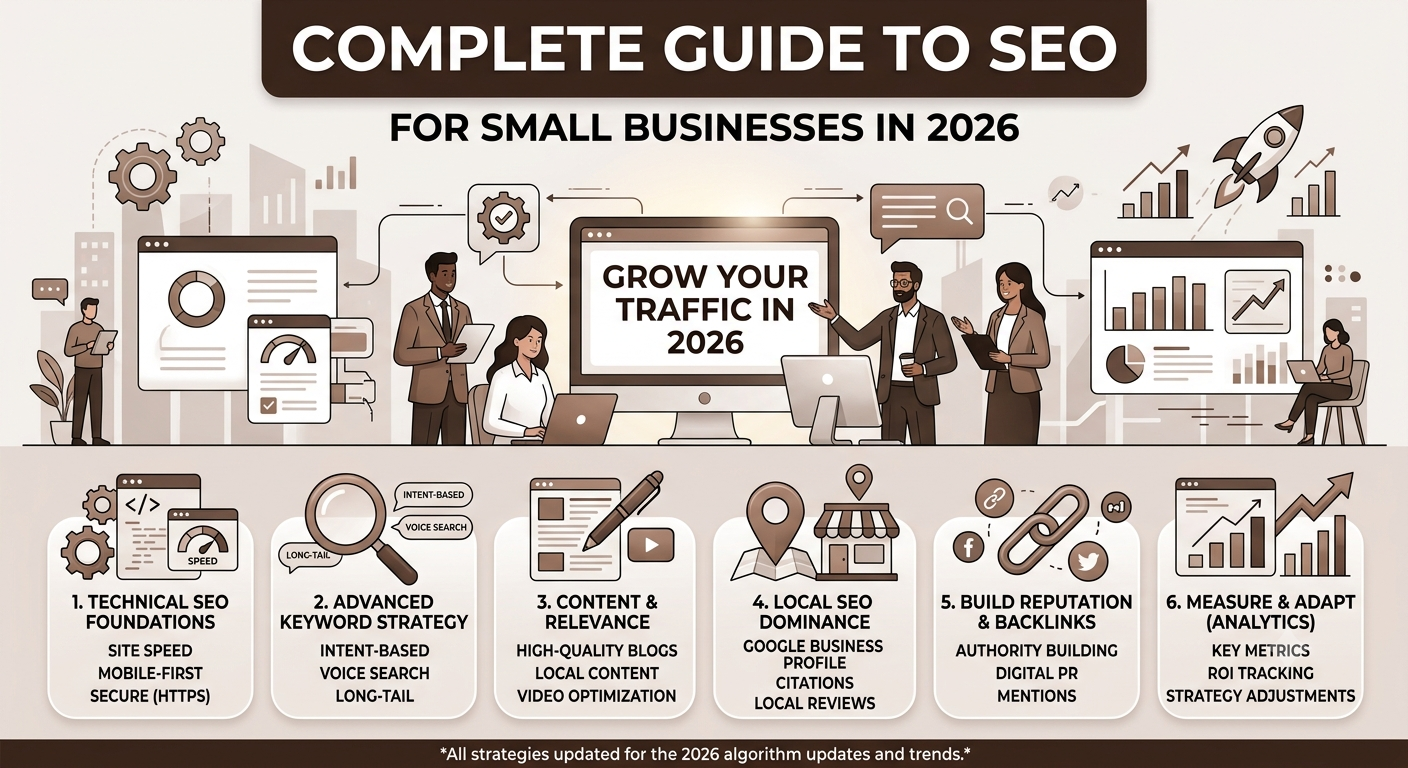
Complete Guide to SEO for Small Businesses in 2026
Search Engine Optimization (SEO) is one of the most effective ways for small businesses to improve their online visibility, attract potential customers, and grow their brand. In 2026, having a website alone is not enough. Businesses need to make sure their websites can be discovered by people searching for their products and services online. SEO helps businesses improve their visibility on search engines like Google by optimizing website content, improving technical performance, and building a strong online presence. Whether you own a small local business, a startup, or an online store, implementing the right SEO strategy can help you reach your target audience and generate more organic traffic without depending entirely on paid advertising. What Is SEO? SEO, or Search Engine Optimization, is the process of improving a website to increase its visibility in organic search engine results. It involves optimizing website content, using relevant keywords, improving website speed, creating a better user experience, and earning quality backlinks. For example, if someone searches for “digital marketing services in Bangalore,” businesses with relevant, well-optimized pages may appear in the search results. SEO helps search engines understand your website and determine how relevant your content is to a user’s search. The main goal of SEO is to attract relevant visitors who are genuinely interested in your products, services, or information. Why Is SEO Important for Small Businesses SEO is important for small businesses because it helps them reach potential customers when they are actively searching for relevant products or services. A well-optimized website can increase organic visibility, build brand awareness, and create opportunities to generate enquiries. Unlike paid advertising, where traffic is generally tied to an ongoing advertising budget, organic SEO can continue to attract visitors over time. However, SEO requires consistent effort, regular updates, and monitoring, and results are not guaranteed. SEO can also help small businesses compete online by targeting specific keywords, answering customer questions, and providing useful content. A strong online presence can help build trust and make it easier for potential customers to learn about a business before contacting it. How Does SEO Work Search engines use automated systems to discover, understand, and organize website content. SEO helps make your website easier for search engines to crawl, index, and understand. SEO generally involves three important processes: crawling, indexing, and ranking. Crawling is when search engines discover web pages by following links and using automated crawlers. Indexing is the process of analyzing and storing information about discovered pages. Ranking refers to how search engines order relevant results in response to a user’s search. Businesses can support these processes by creating useful content, maintaining a clear website structure, fixing technical issues, and using descriptive page titles and headings. The Three Main Types of SEO 1. On-Page SEO On-page SEO involves optimizing the content and elements within your website to help search engines and users understand your pages. It includes using relevant keywords naturally, writing descriptive title tags and meta descriptions, structuring content with headings, optimizing images with suitable alt text, and adding relevant internal links. For example, a website offering website design services in Bangalore can create a dedicated service page explaining its services, process, benefits, and contact options. Well-organized, original content helps visitors find the information they need. 2. Off-Page SEO Off-page SEO includes activities outside your website that can help strengthen its reputation and visibility. One important part of off-page SEO is earning relevant, trustworthy backlinks from other websites. Small businesses can work on building genuine relationships with industry websites, contributing useful articles, participating in relevant business communities, and getting listed in suitable local directories. The focus should be on earning quality links naturally rather than collecting large numbers of irrelevant or spammy backlinks. 3. Technical SEO Technical SEO focuses on making sure your website can be accessed, crawled, and understood by search engines while providing a good experience for users. Important technical SEO elements include website speed, mobile usability, HTTPS security, XML sitemaps, crawlability, proper redirects, and fixing broken links. A technically sound website makes it easier for search engines to discover and process your important pages. How to Build an SEO Strategy for Your Small Business An effective SEO strategy starts with understanding your business, your target audience, and the products or services you offer. Identify the questions your potential customers ask and the search terms they use when looking for solutions. Keyword research helps you discover relevant search queries and understand the intent behind them. Select keywords that match your services and create helpful pages that answer the user’s needs. Avoid adding keywords unnaturally or creating multiple pages with repetitive content. Next, optimize your website’s important pages, including your homepage, service pages, and blog articles. Make sure your website is mobile-friendly, easy to navigate, secure, and reasonably fast. Organize your content into relevant topics and connect related pages through internal links. Publishing useful blog content consistently can also support your SEO strategy. For example, if you offer SEO services, you can publish articles that explain practical SEO techniques, answer common questions, and help small businesses understand how search optimization works. 10 Simple SEO Tips for Small Businesses Small businesses can start improving their SEO by focusing on practical, manageable actions such as choosing relevant keywords, optimizing website titles and meta descriptions, creating original content, improving website speed, and making their websites mobile-friendly. Internal linking can help visitors discover related pages, while relevant backlinks can strengthen your website’s online presence. Businesses serving specific locations can also improve their local visibility by maintaining accurate business information and creating useful location-relevant content. For more practical guidance, read our related article: [10 Simple SEO Tips for Small Businesses]. How Local SEO Helps Small Businesses Get More Customers Local SEO is particularly useful for businesses that serve customers in a specific city, neighbourhood, or service area. It helps businesses improve their visibility when people search for nearby products and services. For example, a salon in Bangalore may want to reach people searching for “salon near me” or “hair salon
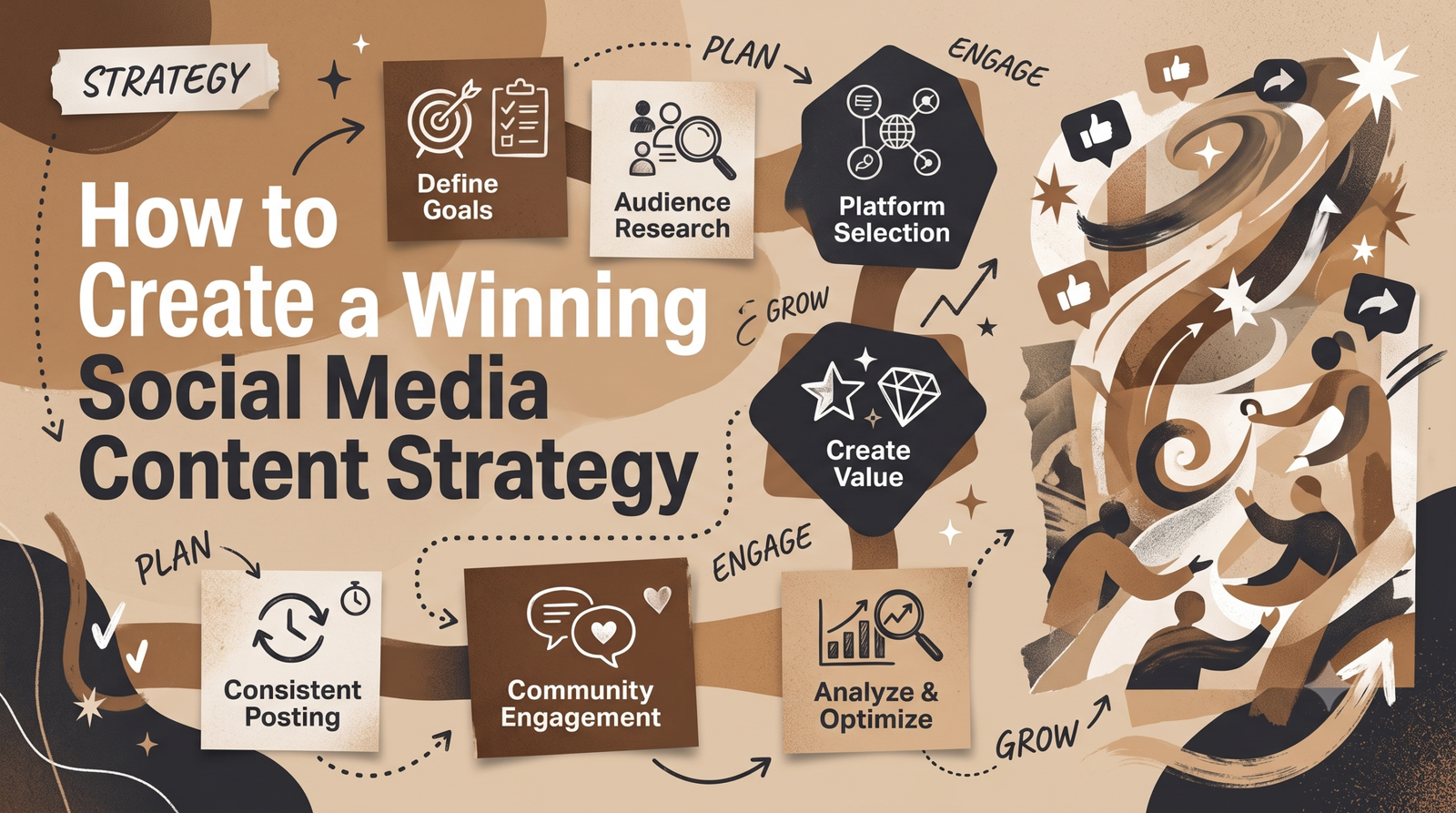
How to Create a Winning Social Media Content Strategy
A strong social media content strategy helps businesses build brand awareness, connect with their target audience, increase engagement, and generate leads. Simply posting regularly is not enough; businesses need to understand their audience, choose the right platforms, create valuable content, and track performance. A well-planned strategy ensures that every post has a clear purpose and supports the overall marketing goals of the business. 1. Define Your Social Media Goals The first step is to identify what you want to achieve through social media. Your goals could include increasing brand awareness, generating leads, driving website traffic, improving engagement, or increasing sales. Clear goals help you create content that supports specific business objectives instead of posting without a clear direction. 2. Understand Your Target Audience Knowing your audience is essential for creating relevant content. Identify their interests, needs, challenges, preferences, and online behavior. Understanding what your audience wants to learn or engage with allows you to create posts that are more useful and relatable. 3. Choose the Right Social Media Platforms Every social media platform has a different audience and content style. Instagram may work well for visual and short-form content, LinkedIn can be useful for professional and B2B communication, while Facebook can support community building and business promotion. Instead of trying to be active everywhere, focus on platforms where your target audience is most relevant. 4. Focus on Value Instead of Constant Promotion Social media users do not want every post to be a sales advertisement. Businesses should balance promotional content with educational, entertaining, inspirational, and informative posts. Providing genuine value can encourage people to follow the brand, engage with its content, and develop trust over time. 5. Follow a Consistent Posting Schedule Consistency helps businesses maintain visibility and develop a recognizable online presence. Create a content calendar that plans what you will post, when you will post it, and which platform you will use. A consistent schedule also makes content creation easier and reduces the chances of running out of ideas. 6. Use Strong Visuals and Captions Visual content can help capture attention, while a good caption provides context and encourages interaction. Use clear images, videos, graphics, and easy-to-read designs that match your brand identity. Captions should communicate the main message clearly and can include questions or calls to action when appropriate. 7. Encourage Audience Engagement Social media is a two-way communication channel. Responding to comments and messages, asking questions, conducting polls, and encouraging discussions can help businesses build relationships with their audience. Regular engagement can also provide useful insights into what customers think about the brand. 8. Use a Clear Call to Action Each post should have a purpose. Depending on your goal, you can encourage users to visit your website, read a blog, send an inquiry, download a resource, or learn more about a service. A clear call to action makes it easier for your audience to understand what they can do next. How AI Is Changing Social Media Marketing in 2026 Artificial intelligence is changing the way businesses approach social media marketing in 2026. AI tools are helping marketers research audiences, generate content ideas, analyze performance, personalize communication, and automate repetitive tasks. Instead of replacing the entire creative process, AI can support marketers by making content planning and campaign management more efficient. AI-powered tools can analyze large amounts of social media data to identify audience interests, content trends, and engagement patterns. These insights can help businesses understand what topics their audiences respond to and improve future content strategies. AI can also assist with creating captions, post ideas, content calendars, visual concepts, and variations of marketing messages for different platforms. Personalization is another important area where AI is making an impact. Businesses can use customer and engagement data to deliver more relevant content to different audience segments. For example, a brand may create different messages based on customer interests, previous interactions, or stages in the buying journey. More relevant communication can create better experiences and encourage meaningful engagement. AI is also helping businesses manage social media conversations more efficiently. AI-powered chatbots and automated systems can assist with common customer questions and provide quick responses. However, human support remains important for complex questions, sensitive situations, and conversations that require personal understanding. Video and visual content are also being influenced by AI. Marketers can use AI-assisted tools to generate ideas, edit videos, create subtitles, resize content for different platforms, and develop creative variations. This makes it easier for businesses to adapt one piece of content into multiple formats for different social media channels. Another major benefit is social media performance analysis. AI can process campaign data and identify patterns that may be difficult to spot manually. Marketers can use these insights to understand engagement, reach, audience behavior, and content performance, then adjust their strategies based on the available data. At the same time, businesses need to use AI responsibly. Automatically generated content can sometimes be inaccurate, repetitive, or lack a genuine brand personality. Human review is important to maintain accuracy, originality, creativity, and a consistent brand voice. Businesses should also consider privacy and transparency when using customer data and AI-powered tools.
