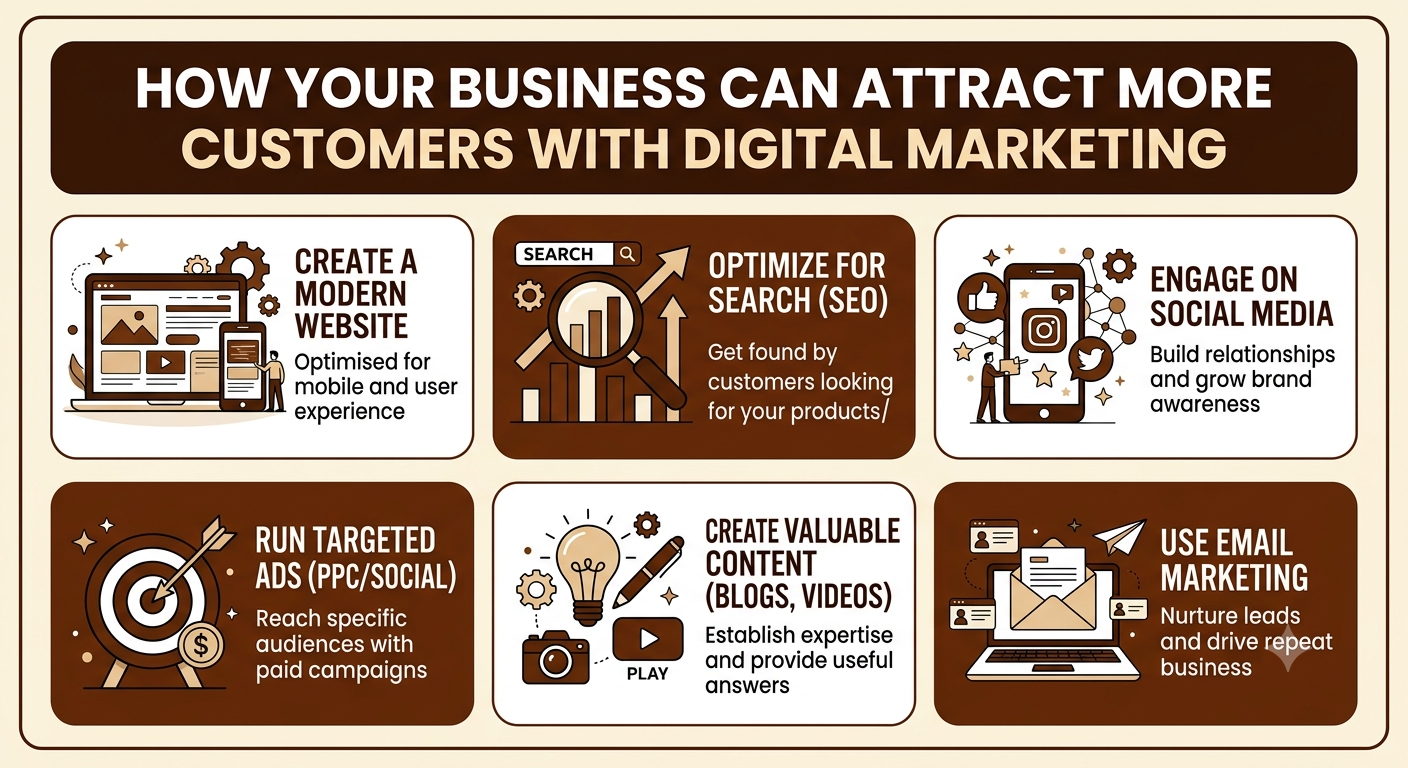

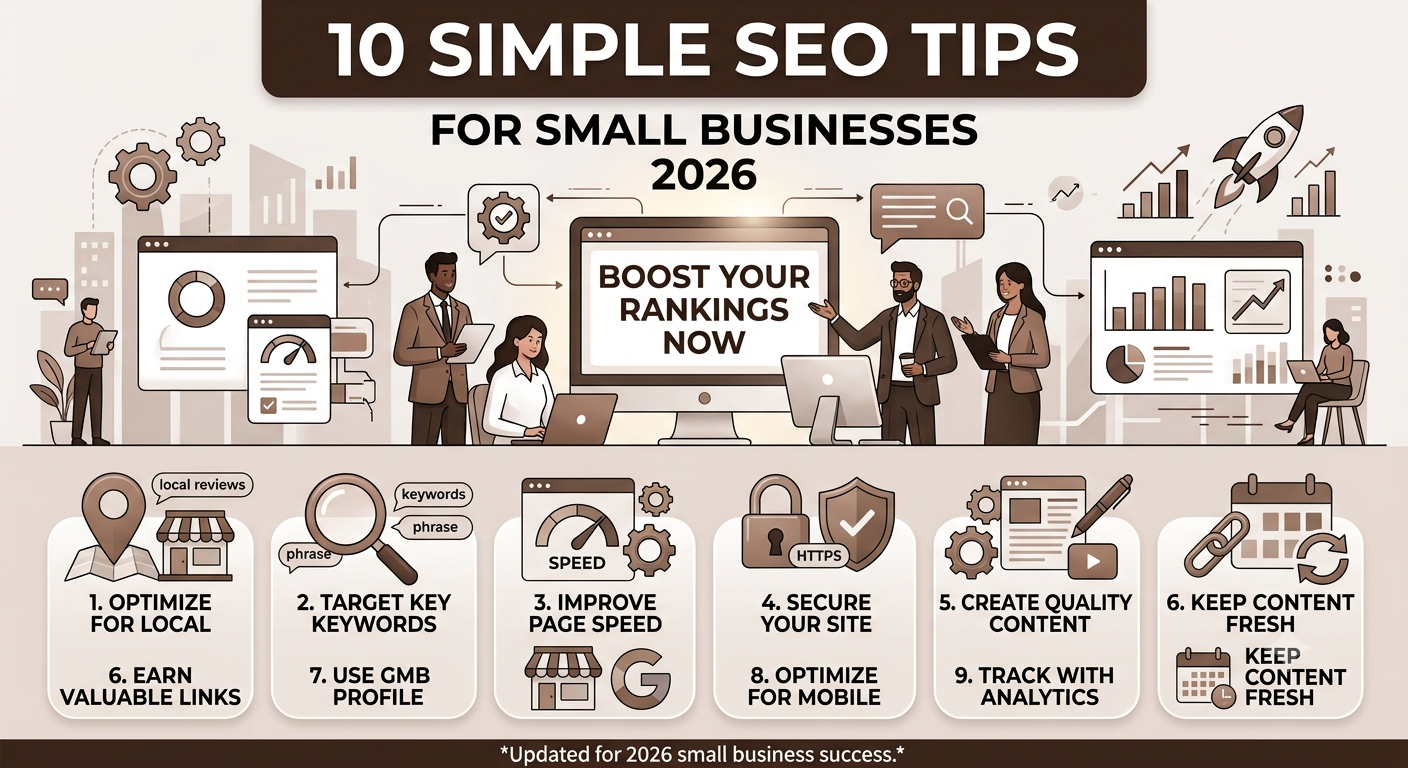
Search Engine Optimization (SEO) is an important part of digital marketing for small businesses that want to improve their online visibility and attract potential customers. In 2026, many customers use search engines like Google to find products, services, and local businesses. A well-optimized website can help your business appear in relevant search results, increase organic traffic, and build trust with your target audience.
SEO may seem complicated at first, especially for small businesses with limited budgets and resources. However, following some simple SEO practices consistently can help improve your website’s performance over time. Whether you own a startup, a local shop, or a service-based business, these ten SEO tips can help you build a stronger online presence.
1. Choose the Right Keywords
Keyword research is one of the first steps in SEO. Keywords are the words and phrases people type into search engines when looking for information, products, or services. Understanding what your potential customers are searching for can help you create relevant website content that matches their needs.
For example, if you own a bakery in Bangalore, you may target keywords such as “best bakery in Bangalore,” “birthday cake shop near me,” or “custom cakes in Bangalore.” Choose keywords that are closely related to your business, consider what the searcher wants, and use these phrases naturally in your website content, headings, and page titles.
2. Optimize Your Page Titles and Meta Descriptions
Page titles and meta descriptions help users understand what your website pages are about when they appear in search results. A clear and relevant title can communicate the main topic of your page, while a helpful meta description can encourage people to visit your website.
For example, a digital marketing freelancer could use a title such as “SEO Services in Bangalore | Puneeth” and a description explaining the SEO services offered to small businesses. Keep your titles descriptive and unique, and write meta descriptions that accurately summarize the page rather than simply repeating keywords.
3. Create High-Quality and Helpful Content
Creating useful and original content is an important part of a successful SEO strategy. Your website should answer the questions your target audience is asking and provide information that helps them make decisions. Blog articles, service pages, guides, and frequently asked questions can all help visitors understand your business.
For example, a small business offering digital marketing services can publish articles about SEO, social media marketing, website design, and online advertising. Focus on content that is accurate, easy to read, and genuinely helpful. Avoid copying content from other websites or creating articles solely to insert keywords.
4. Optimize Your Website for Mobile Devices
Many people use smartphones to search for businesses, browse products, and access online services. A mobile-friendly website makes it easier for visitors to read your content, navigate your pages, and contact your business without unnecessary zooming or scrolling.
Make sure your website has responsive layouts, readable text, easy-to-use buttons, and clear navigation on different screen sizes. A good mobile experience helps visitors interact with your website and is also part of Google’s page experience considerations.
5. Improve Your Website Loading Speed
Website speed is an important part of user experience. If your website takes too long to load, visitors may leave before viewing your content or services. Slow performance can be caused by large image files, unnecessary plugins, unoptimized scripts, or hosting limitations.
You can improve your website’s performance by compressing images, using modern image formats, reducing unnecessary scripts, choosing reliable hosting, and monitoring loading performance. Tools such as Google PageSpeed Insights can help you identify issues and find opportunities to improve your website.
6. Use Internal Linking
Internal linking means connecting one page of your website to another relevant page. It helps visitors discover related information and allows search engines to better understand the structure of your website.
For example, if you have a blog about basic SEO practices, you can link to your main SEO guide, relevant service pages, and other related articles. You can explore our Complete Guide to SEO for Small Businesses in 2026 to understand how different SEO techniques work together.
Internal links should be useful and natural. Choose descriptive anchor text that tells readers what they can expect when they click the link.
7. Optimize Your Google Business Profile
For businesses serving customers in a particular location, Google Business Profile can help improve visibility on Google Search and Maps. It allows potential customers to find important information about your business, such as your address or service area, phone number, business hours, website, and services.
Keep your profile accurate and updated with relevant photos, business details, and genuine customer reviews. Respond professionally to customer feedback and ensure that the information on your profile matches your actual business details. This can make it easier for nearby customers to discover and contact you.
8. Build Relevant and Quality Backlinks
Backlinks are links from other websites that point to your website. Relevant and trustworthy backlinks can help search engines discover your content and may contribute to your website’s authority and reputation.
Small businesses can work towards earning backlinks by publishing useful resources, collaborating with relevant businesses, contributing expert articles, and getting listed in appropriate industry or local directories. Focus on the relevance and quality of links rather than trying to acquire a large number of backlinks through spammy methods.
9. Focus on Local SEO
Local SEO helps businesses improve their visibility for searches related to a particular location. It is especially useful for businesses such as restaurants, salons, clinics, service providers, and retail stores that serve customers in specific areas.
For example, a salon in Bangalore may want to appear for searches such as “hair salon in Bangalore” or “salon near me.” Maintaining an accurate Google Business Profile, creating helpful location-specific website content, and collecting genuine customer reviews can support local SEO efforts.
To learn more about this strategy, read our related guide: How Local SEO Helps Small Businesses Get More Customers.
10. Monitor Your SEO Performance
SEO requires ongoing improvement, so monitoring your website’s performance is essential. Tools such as Google Search Console and Google Analytics can help you understand how people find your website, which pages attract visitors, and how users interact with your content.
You can review organic search clicks, impressions, search queries, website traffic, engagement, and enquiries to identify areas that need improvement. Regularly reviewing this information can help you refine your keywords, update existing content, and make better decisions about your SEO strategy.
Conclusion
SEO does not have to be complicated or expensive for small businesses to get started. By choosing relevant keywords, creating helpful content, optimizing your website, improving mobile usability, and monitoring your performance, you can build a solid foundation for long-term online visibility.
Consistency is important because SEO takes time and results can vary depending on your industry, competition, and website condition. Start with these simple tips, review your progress regularly, and continue improving your website to attract relevant visitors and create more opportunities for business growth.
If you want to understand SEO in more detail, explore our Complete Guide to SEO for Small Businesses in 2026. If your business serves a specific area, our article on How Local SEO Helps Small Businesses Get More Customers explains how local search optimization can support your online presence. Want to improve your website’s visibility on Google? Get in touch to explore SEO and digital marketing solutions tailored to your business.