
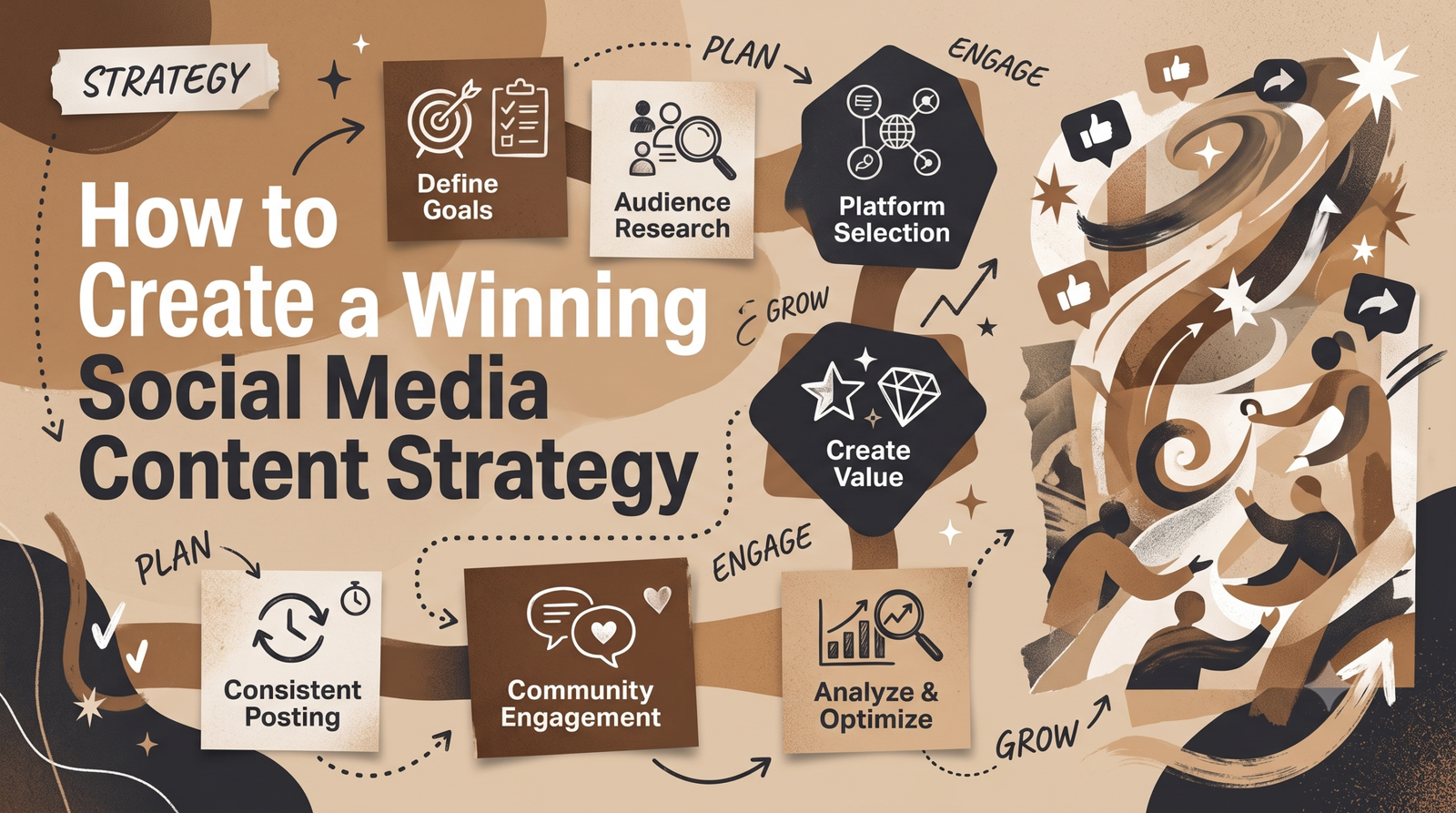
A strong social media content strategy helps businesses build brand awareness, connect with their target audience, increase engagement, and generate leads. Simply posting regularly is not enough; businesses need to understand their audience, choose the right platforms, create valuable content, and track performance. A well-planned strategy ensures that every post has a clear purpose and supports the overall marketing goals of the business.
1. Define Your Social Media Goals
The first step is to identify what you want to achieve through social media. Your goals could include increasing brand awareness, generating leads, driving website traffic, improving engagement, or increasing sales. Clear goals help you create content that supports specific business objectives instead of posting without a clear direction.
2. Understand Your Target Audience
Knowing your audience is essential for creating relevant content. Identify their interests, needs, challenges, preferences, and online behavior. Understanding what your audience wants to learn or engage with allows you to create posts that are more useful and relatable.
3. Choose the Right Social Media Platforms
Every social media platform has a different audience and content style. Instagram may work well for visual and short-form content, LinkedIn can be useful for professional and B2B communication, while Facebook can support community building and business promotion. Instead of trying to be active everywhere, focus on platforms where your target audience is most relevant.
4. Focus on Value Instead of Constant Promotion
Social media users do not want every post to be a sales advertisement. Businesses should balance promotional content with educational, entertaining, inspirational, and informative posts. Providing genuine value can encourage people to follow the brand, engage with its content, and develop trust over time.
5. Follow a Consistent Posting Schedule
Consistency helps businesses maintain visibility and develop a recognizable online presence. Create a content calendar that plans what you will post, when you will post it, and which platform you will use. A consistent schedule also makes content creation easier and reduces the chances of running out of ideas.
6. Use Strong Visuals and Captions
Visual content can help capture attention, while a good caption provides context and encourages interaction. Use clear images, videos, graphics, and easy-to-read designs that match your brand identity. Captions should communicate the main message clearly and can include questions or calls to action when appropriate.
7. Encourage Audience Engagement
Social media is a two-way communication channel. Responding to comments and messages, asking questions, conducting polls, and encouraging discussions can help businesses build relationships with their audience. Regular engagement can also provide useful insights into what customers think about the brand.
8. Use a Clear Call to Action
Each post should have a purpose. Depending on your goal, you can encourage users to visit your website, read a blog, send an inquiry, download a resource, or learn more about a service. A clear call to action makes it easier for your audience to understand what they can do next.
How AI Is Changing Social Media Marketing in 2026
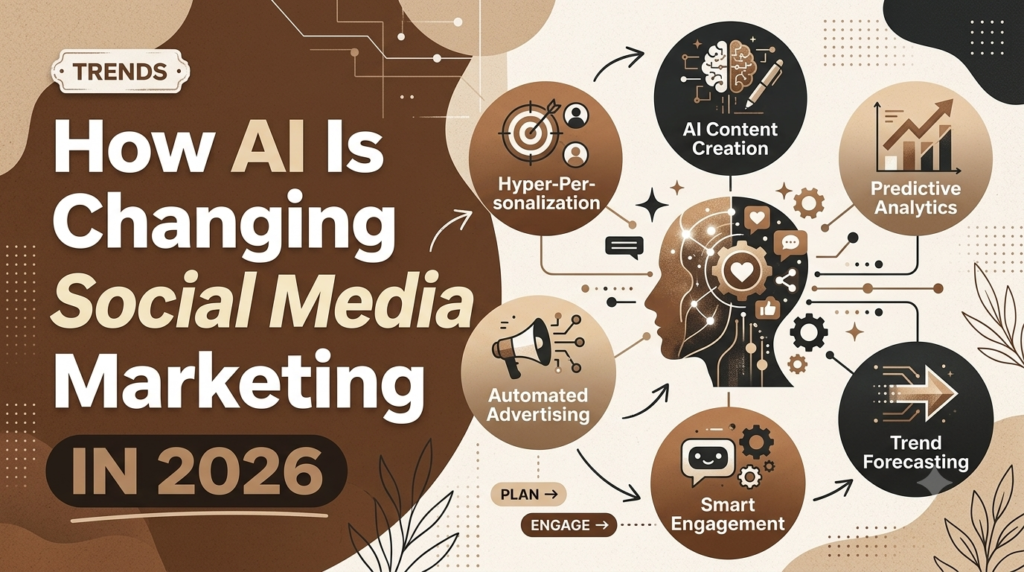
Artificial intelligence is changing the way businesses approach social media marketing in 2026. AI tools are helping marketers research audiences, generate content ideas, analyze performance, personalize communication, and automate repetitive tasks. Instead of replacing the entire creative process, AI can support marketers by making content planning and campaign management more efficient.
AI-powered tools can analyze large amounts of social media data to identify audience interests, content trends, and engagement patterns. These insights can help businesses understand what topics their audiences respond to and improve future content strategies. AI can also assist with creating captions, post ideas, content calendars, visual concepts, and variations of marketing messages for different platforms.
Personalization is another important area where AI is making an impact. Businesses can use customer and engagement data to deliver more relevant content to different audience segments. For example, a brand may create different messages based on customer interests, previous interactions, or stages in the buying journey. More relevant communication can create better experiences and encourage meaningful engagement.
AI is also helping businesses manage social media conversations more efficiently. AI-powered chatbots and automated systems can assist with common customer questions and provide quick responses. However, human support remains important for complex questions, sensitive situations, and conversations that require personal understanding.
Video and visual content are also being influenced by AI. Marketers can use AI-assisted tools to generate ideas, edit videos, create subtitles, resize content for different platforms, and develop creative variations. This makes it easier for businesses to adapt one piece of content into multiple formats for different social media channels.
Another major benefit is social media performance analysis. AI can process campaign data and identify patterns that may be difficult to spot manually. Marketers can use these insights to understand engagement, reach, audience behavior, and content performance, then adjust their strategies based on the available data.
At the same time, businesses need to use AI responsibly. Automatically generated content can sometimes be inaccurate, repetitive, or lack a genuine brand personality. Human review is important to maintain accuracy, originality, creativity, and a consistent brand voice. Businesses should also consider privacy and transparency when using customer data and AI-powered tools.