
Search Engine Optimization (SEO) is one of the most effective ways for small businesses to improve their online visibility, attract potential customers, and grow their brand. In 2026, having a website alone is not enough. Businesses need to make sure their websites can be discovered by people searching for their products and services online.
SEO helps businesses improve their visibility on search engines like Google by optimizing website content, improving technical performance, and building a strong online presence. Whether you own a small local business, a startup, or an online store, implementing the right SEO strategy can help you reach your target audience and generate more organic traffic without depending entirely on paid advertising.
What Is SEO?
SEO, or Search Engine Optimization, is the process of improving a website to increase its visibility in organic search engine results. It involves optimizing website content, using relevant keywords, improving website speed, creating a better user experience, and earning quality backlinks.
For example, if someone searches for “digital marketing services in Bangalore,” businesses with relevant, well-optimized pages may appear in the search results. SEO helps search engines understand your website and determine how relevant your content is to a user’s search.
The main goal of SEO is to attract relevant visitors who are genuinely interested in your products, services, or information.
Why Is SEO Important for Small Businesses
SEO is important for small businesses because it helps them reach potential customers when they are actively searching for relevant products or services. A well-optimized website can increase organic visibility, build brand awareness, and create opportunities to generate enquiries.
Unlike paid advertising, where traffic is generally tied to an ongoing advertising budget, organic SEO can continue to attract visitors over time. However, SEO requires consistent effort, regular updates, and monitoring, and results are not guaranteed.
SEO can also help small businesses compete online by targeting specific keywords, answering customer questions, and providing useful content. A strong online presence can help build trust and make it easier for potential customers to learn about a business before contacting it.
How Does SEO Work
Search engines use automated systems to discover, understand, and organize website content. SEO helps make your website easier for search engines to crawl, index, and understand.
SEO generally involves three important processes: crawling, indexing, and ranking.
Crawling is when search engines discover web pages by following links and using automated crawlers. Indexing is the process of analyzing and storing information about discovered pages. Ranking refers to how search engines order relevant results in response to a user’s search.
Businesses can support these processes by creating useful content, maintaining a clear website structure, fixing technical issues, and using descriptive page titles and headings.
The Three Main Types of SEO
1. On-Page SEO
On-page SEO involves optimizing the content and elements within your website to help search engines and users understand your pages. It includes using relevant keywords naturally, writing descriptive title tags and meta descriptions, structuring content with headings, optimizing images with suitable alt text, and adding relevant internal links.
For example, a website offering website design services in Bangalore can create a dedicated service page explaining its services, process, benefits, and contact options. Well-organized, original content helps visitors find the information they need.
2. Off-Page SEO
Off-page SEO includes activities outside your website that can help strengthen its reputation and visibility. One important part of off-page SEO is earning relevant, trustworthy backlinks from other websites.
Small businesses can work on building genuine relationships with industry websites, contributing useful articles, participating in relevant business communities, and getting listed in suitable local directories. The focus should be on earning quality links naturally rather than collecting large numbers of irrelevant or spammy backlinks.
3. Technical SEO
Technical SEO focuses on making sure your website can be accessed, crawled, and understood by search engines while providing a good experience for users.
Important technical SEO elements include website speed, mobile usability, HTTPS security, XML sitemaps, crawlability, proper redirects, and fixing broken links. A technically sound website makes it easier for search engines to discover and process your important pages.
How to Build an SEO Strategy for Your Small Business
An effective SEO strategy starts with understanding your business, your target audience, and the products or services you offer. Identify the questions your potential customers ask and the search terms they use when looking for solutions.
Keyword research helps you discover relevant search queries and understand the intent behind them. Select keywords that match your services and create helpful pages that answer the user’s needs. Avoid adding keywords unnaturally or creating multiple pages with repetitive content.
Next, optimize your website’s important pages, including your homepage, service pages, and blog articles. Make sure your website is mobile-friendly, easy to navigate, secure, and reasonably fast. Organize your content into relevant topics and connect related pages through internal links.
Publishing useful blog content consistently can also support your SEO strategy. For example, if you offer SEO services, you can publish articles that explain practical SEO techniques, answer common questions, and help small businesses understand how search optimization works.
10 Simple SEO Tips for Small Businesses
Small businesses can start improving their SEO by focusing on practical, manageable actions such as choosing relevant keywords, optimizing website titles and meta descriptions, creating original content, improving website speed, and making their websites mobile-friendly.
Internal linking can help visitors discover related pages, while relevant backlinks can strengthen your website’s online presence. Businesses serving specific locations can also improve their local visibility by maintaining accurate business information and creating useful location-relevant content.
For more practical guidance, read our related article: [10 Simple SEO Tips for Small Businesses].
How Local SEO Helps Small Businesses Get More Customers
Local SEO is particularly useful for businesses that serve customers in a specific city, neighbourhood, or service area. It helps businesses improve their visibility when people search for nearby products and services.
For example, a salon in Bangalore may want to reach people searching for “salon near me” or “hair salon in Bangalore.” Keeping a Google Business Profile updated, maintaining consistent business details, collecting genuine customer reviews, and creating useful local website content can support local search visibility.
Local SEO helps businesses connect with people who are searching for services in their area. To learn more, read our related article: [How Local SEO Helps Small Businesses Get More Customers].
The Role of Content in SEO
Content plays an important role in helping search engines understand what your website offers and helping visitors find useful information. High-quality content should be relevant, original, easy to understand, and written to address the needs of your target audience.
Businesses can create service pages, blog articles, guides, FAQs, and case studies to answer common questions and explain their expertise. Rather than publishing content simply to target keywords, focus on providing accurate and helpful information that gives visitors a reason to engage with your business.
Regularly reviewing and updating existing content can also help keep it accurate and useful as your products, services, and customer needs change.
How to Measure SEO Performance
Measuring SEO performance helps you understand whether your efforts are improving your website’s visibility and attracting relevant visitors.
Google Search Console can help you monitor search queries, clicks, impressions, indexing issues, and search performance. Google Analytics can provide insights into website traffic, user engagement, and actions visitors take on your website.
You can monitor organic traffic, relevant keyword visibility, engagement, enquiries, and conversions over time. SEO results may take several months to become noticeable, depending on your industry, website condition, competition, and the work being implemented.
Review your performance regularly and use the insights to identify opportunities for improvement.
Common SEO Mistakes Small Businesses Should Avoid
Some businesses focus too heavily on inserting keywords without considering whether their content is useful to readers. Others overlook mobile usability, ignore technical website issues, or create multiple pages with very similar content.
Buying spammy backlinks, copying content from other websites, and expecting immediate rankings can also lead to poor results. Instead, focus on providing a good user experience, publishing original content, maintaining a technically healthy website, and following sustainable SEO practices.
How Long Does SEO Take to Show Results?
SEO is a long-term process, and results depend on several factors, including your website’s current condition, competition, content quality, industry, and the consistency of your optimization efforts.
Some improvements, such as fixing indexing issues or optimizing page titles, may help search engines understand your website more effectively. However, improvements in organic visibility, traffic, and enquiries may take several months or longer.
It is important to monitor your performance, make informed improvements, and avoid expecting guaranteed rankings or instant results.
Conclusion
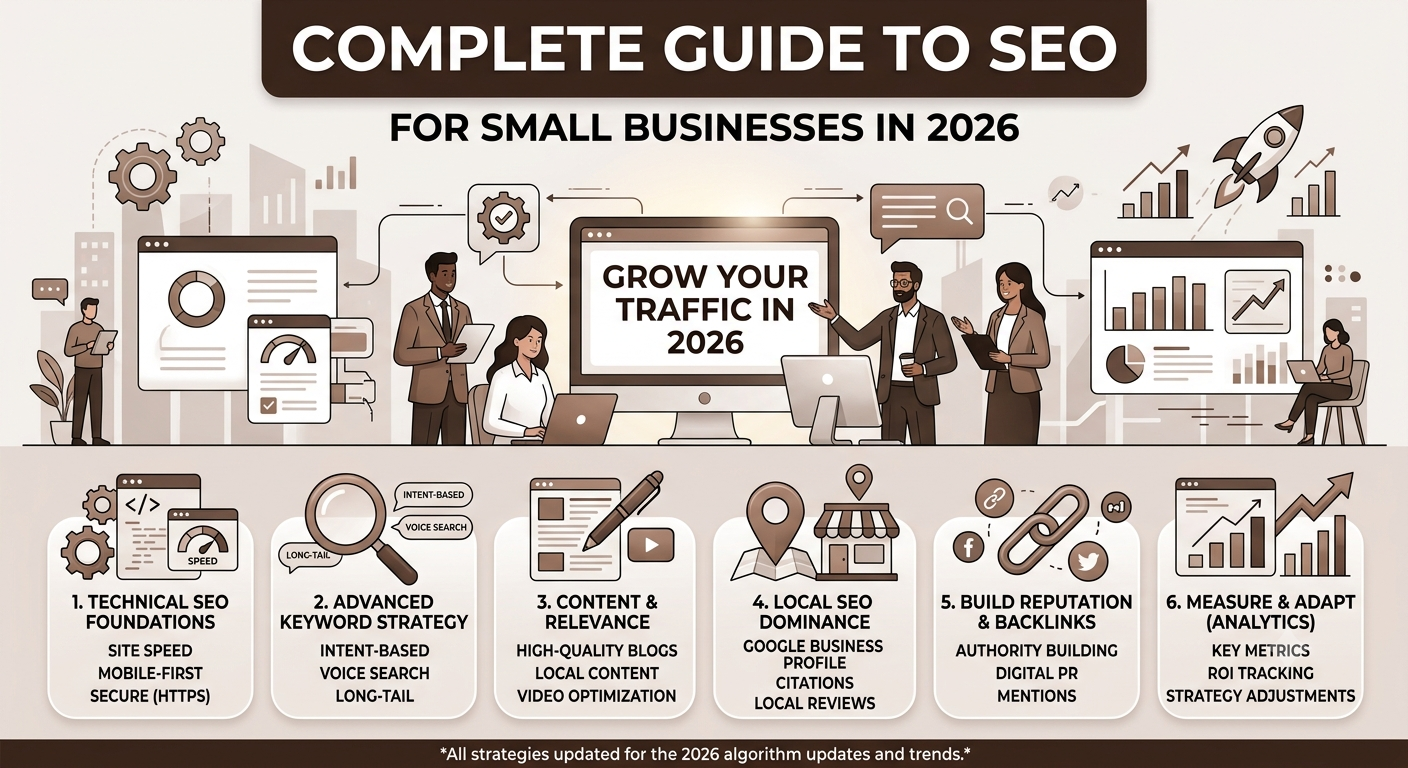
SEO is an important part of digital growth for small businesses in 2026. It helps businesses improve online visibility, attract relevant visitors, build trust, and create more opportunities to connect with potential customers.
By focusing on on-page SEO, off-page SEO, technical SEO, useful content, and local search optimization, small businesses can build a strong foundation for their online presence. Consistent effort, regular performance monitoring, and continuous improvement are essential for long-term SEO growth.
If you want to improve your website’s search visibility and attract more potential customers, investing in a well-planned SEO strategy can be a valuable step towards growing your business.
Looking to improve your website’s SEO? Get in touch to explore SEO, website design, and digital marketing solutions tailored to your business.