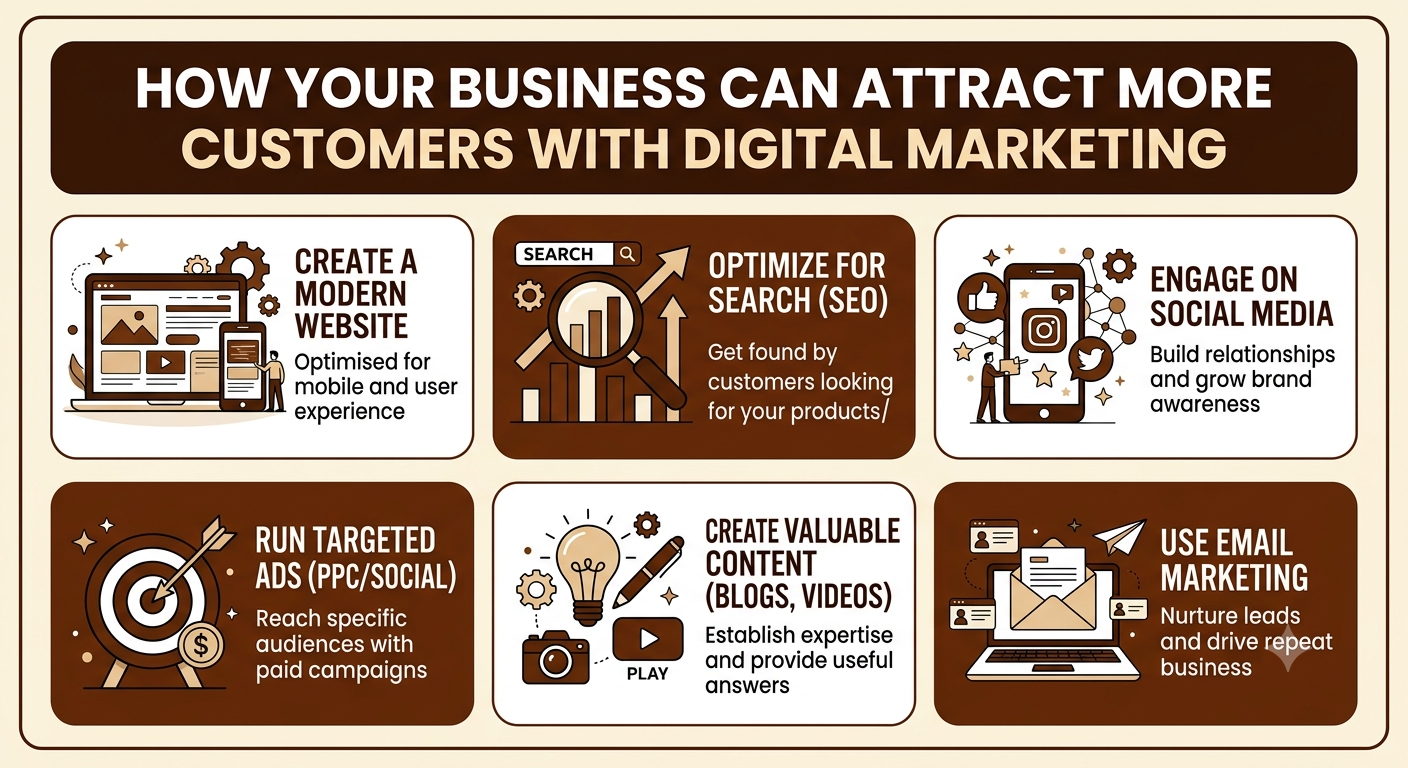


It’s start in 2026, having a strong online presence is essential for businesses of all sizes. Whether you run a small local business, a startup, or an established company, a professional website can help you build credibility, reach more customers, generate leads, and grow your brand.
1. Build Trust and Credibility
Customers often search online before choosing a business. A professional and well-designed website can create a positive first impression and make your business look more trustworthy.
2. Reach More Customers
A physical store can only reach people in a particular location, but a website can make your business visible to people searching online.
With SEO (Search Engine Optimization), your website can appear in search engine results when potential customers search for products or services related to your business.
3. Generate More Leads
Content writing helps businesses generate more leads by attracting potential customers and guiding them through the buying journey. Informative blog posts, engaging website content, and persuasive landing pages can answer customer questions, build trust, and encourage visitors to take action. By including relevant keywords and clear calls to action, businesses can attract the right audience, increase website inquiries, and convert visitors into potential customers. In 2026, valuable and audience-focused content remains an important part of generating quality leads through digital marketing.
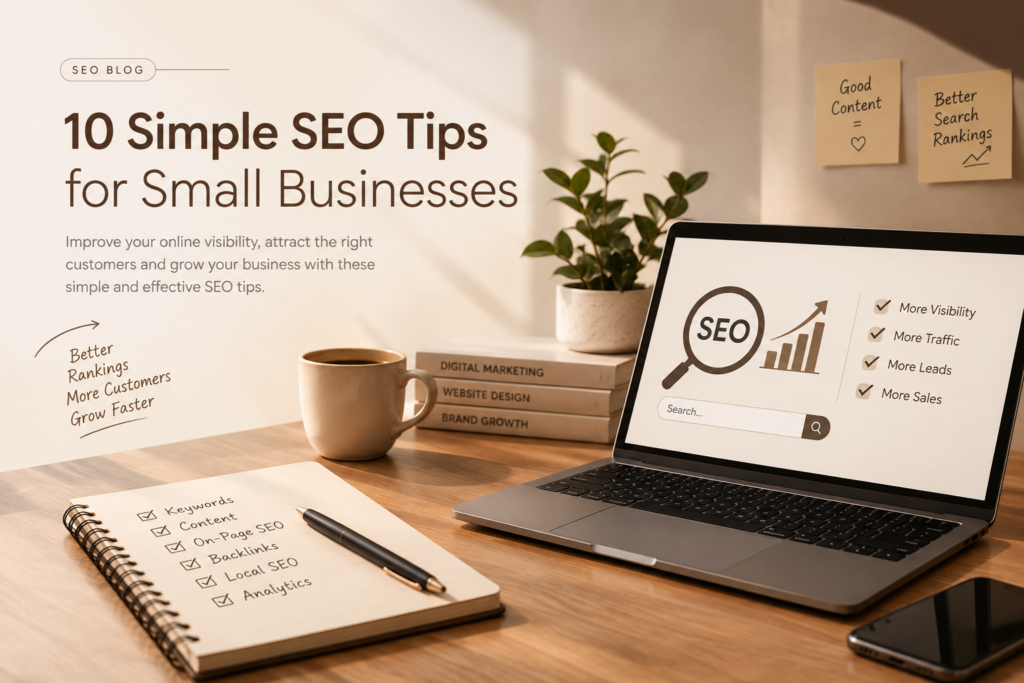
10 Simple SEO Tips for Small Businesses
SEO, or Search Engine Optimization, is one of the most effective ways for small businesses to improve their online visibility and reach potential customers. When people search on Google for products or services, they usually choose from the businesses that appear in the search results. A good SEO strategy can help your business appear for relevant searches and bring more visitors to your website without relying only on paid advertising.
The first step in SEO is understanding what your potential customers are searching for. These search terms are called keywords. For example, a local bakery may target phrases such as “bakery near me,” “best bakery in Bangalore,” or “birthday cakes in Bangalore.” Businesses should use relevant keywords naturally throughout their website content, page titles, headings, and descriptions. Choosing keywords based on what your customers actually search for can help your website reach a more relevant audience.
Your website’s page titles and meta descriptions are also important. They help search engines understand your pages and give users an idea of what they will find when they see your website in search results. Creating clear, descriptive, and relevant titles can make your pages easier to understand and may encourage more users to visit your website.
Creating useful and original content is another important part of SEO. Businesses can publish blogs, guides, FAQs, service information, and helpful articles that answer common customer questions. Instead of creating content only for search engines, focus on providing information that is genuinely useful to your target audience. Helpful content can attract visitors, build trust, and encourage people to explore more pages on your website.
For businesses that serve a specific location, local SEO can be especially valuable. Keeping your Google Business Profile accurate and updated can help potential customers discover your business through Google Search and Maps. Make sure your business information, contact details, working hours, services, photos, and other important information are correct and regularly maintained.
Your website should also provide a good experience on mobile devices. Many users browse websites using smartphones, so your pages should be easy to read, navigate, and interact with on smaller screens. Website speed is equally important. Large images, unnecessary plugins, and poorly optimized website elements can slow down your pages. Compressing images, improving website performance, and using reliable hosting can help create a faster experience for visitors.
Internal linking is another simple SEO practice that can improve website navigation. You can link relevant pages and blog articles together so visitors can easily discover more information. For example, a blog about SEO can link to your SEO services page. This can help users find related information while also helping search engines understand the structure of your website.
Building relevant and trustworthy backlinks can also support your SEO efforts. A backlink is a link from another website to your website. Small businesses can earn relevant backlinks through local directories, industry websites, business partnerships, useful resources, and genuine collaborations. The focus should be on obtaining relevant and trustworthy links rather than simply trying to collect a large number of backlinks.
Finally, SEO performance should be monitored regularly. Tools such as Google Search Console and Google Analytics can help you understand how people find and use your website. You can see information about search queries, clicks, impressions, website traffic, popular pages, and user behavior. This information can help you identify what is working and where improvements are needed.
SEO is not an overnight process. It requires consistent effort, useful content, technical improvements, and regular monitoring. By focusing on the basics and continuously improving your website, small businesses can build a stronger online presence, attract relevant visitors, and create more opportunities to turn those visitors into customers.